Subsea Commercial Services Ltd.

How field-deployable cable repair and low-volume manufacturing can improve project efficiency, simplify logistics and keep subsea testing programmes moving.
The small cable problem that can create a big offshore delay
In subsea operations, a damaged cable or the need for a short, bespoke cable assembly can become a surprisingly expensive problem.
A fault affecting an ROV camera, lighting system, pan-and-tilt unit or subsea sensor connection may be relatively straightforward to address from an engineering perspective. However, if the required repair depends on returning a cable to a specialist manufacturer, sourcing a replacement assembly or waiting for materials to arrive, the resulting delay can extend far beyond the repair itself.
For offshore projects, the consequences can include disrupted work scopes, postponed testing, additional logistics and costly vessel or personnel downtime.
For equipment developers and test engineers, similar challenges can interrupt development programmes, delay repeat testing and create unnecessary pressure on project delivery schedules.
What if the capability to make or repair the required cable assembly was already available on site?
The Reusable Subsea Cable Mould Kit, developed by Dead Reckoning Engineering (DRE) and made available globally through Subsea Commercial Services Ltd (SCS), is designed to address this practical challenge by giving operators greater control over cable repair and low-volume manufacturing.
- Reduce downtime by bringing cable repair closer to the problem
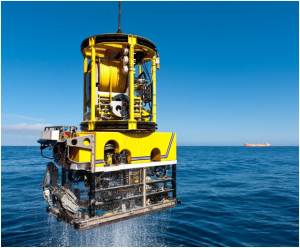
Traditional cable repair can introduce several stages of delay: identifying the fault, arranging a replacement, transporting equipment, waiting for specialist manufacturing and coordinating the return of the finished assembly.
These steps can be particularly disruptive when equipment is already offshore or a test programme is working to a fixed schedule.
A reusable cable mould kit provides another option. Subject to the cable type, repair requirements and approved engineering procedures, suitable cable splices can be produced on site rather than automatically relying on an external manufacturing turnaround.
This can help operators:
- Reduce dependence on external cable repair and manufacturing services for suitable applications.
- Respond more quickly to cable damage identified during mobilisation, testing or operations.
- Keep spare equipment and replacement assemblies available when they are needed.
- Reduce the risk that a relatively minor cable issue delays a much larger work scope.
The commercial value is especially significant where an avoidable delay affects vessel time, offshore personnel, ROV availability or a critical project milestone.
The objective is not to eliminate specialist cable manufacturing. It is to give project teams an additional, practical option when a field repair or low-volume assembly is appropriate.
- A reusable tool designed to reduce repeat expenditure
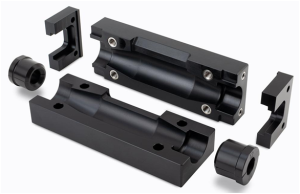
Disposable splice tooling can be an ongoing expense for organisations that regularly repair cables or produce small batches of bespoke assemblies.
The Reusable Subsea Cable Mould takes a different approach: retain the mould body and changeout or adapt the insert to suit the job.
The mould is designed to produce waterproof RTV polyurethane splices on unarmoured subsea data cables. Standard inserts cover cable diameters of 7, 8, 9, 10 and 12 mm, while blank inserts can be drilled by the user for suitable non-standard diameters without modifying the main mould body.
The potential commercial benefits include:
- Less repeat tooling expenditure: reuse the mould body across suitable jobs rather than continually buying complete disposable kits.
- Greater flexibility: accommodate different supported cable diameters using interchangeable inserts.
- Lower-volume manufacturing: produce small quantities of suitable cable assemblies without necessarily commissioning a specialist manufacturer for every requirement.
- Simplified inventory: hold a reusable mould and relevant inserts rather than relying exclusively on multiple dedicated tooling solutions.
The kit is available in straight inline and Y-splice configurations, providing options for both cable repairs and three-way cable junctions.
Its economic advantage increases when the tooling is used repeatedly across projects, equipment fleets or testing programmes.
- Saving money: where the return on investment comes from
The most important financial consideration is not simply the purchase price of the kit. It is the potential cost of the alternative.
An offshore delay can involve several cost categories at once: vessel or ROV time, personnel, logistics, equipment hire and the knock-on consequences of missing a planned operational window.
A reusable mould kit may help avoid some of these costs when a suitable repair can be completed locally and the alternative would otherwise delay the project.
An illustrative offshore cost comparison
The following example is intended to show how operators can assess the business case. These figures are illustrative only and are not quoted SCS prices or guaranteed savings.
EXAMPLE SCENARIO
The cost of one avoidable day offshore
Reusable kit initial purchase cost:£2,000
Daily avoidable project / vessel / ROV cost:£30,000
Additional avoidable logistics cost:£1,000
Days of delay avoided: 2 Day
Consumables and other repair costs:£500
Illustrative avoided cost
£31,000
Illustrative net benefit after kit and repair costs
£28,500
Calculation assumes the selected delay and logistics costs are genuinely avoided. It excludes training, additional labour, testing, taxes and any other costs not entered. The kit cost is treated as a first-use investment; subsequent suitable uses may improve the cumulative return.
The calculation demonstrates why a reusable cable mould can be worth considering even when the original cable repair appears relatively minor.
If a kit prevents a costly delay, its purchase cost may be recovered quickly. If it is then reused across several projects, the economics may become more attractive still.
However, the actual return depends on the frequency of use, the cost of alternative repairs, consumable requirements and whether the intervention genuinely avoids project downtime. Not every repair will generate a saving of this scale.
- Keep testing and development programmes moving
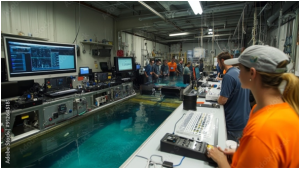
Testing programmes often involve repeated assembly, integration, inspection and validation activities. A cable fault discovered during a test can interrupt the programme while engineers source replacement parts or arrange external repairs.
For subsea equipment manufacturers, ROV integrators and engineering teams, having suitable cable moulding tooling available can help reduce this dependency.
Potential applications include:
- Repairing suitable ROV lighting and camera cables between test runs.
- Producing short cable assemblies for prototype integration and equipment development.
- Creating sensor and data connections for marine instrumentation.
- Supporting acoustic communications and datalogger-to-sensor connections.
- Preparing suitable cable assemblies for planned field trials and deployment programmes.
The practical benefit is flexibility. Rather than treating every cable issue as a new procurement exercise, engineering teams can assess whether the repair or assembly can be completed in-house.
This can be particularly useful during iterative development, where small changes to instrumentation layouts or cable routing may create a need for additional short assemblies.
Importantly, a reusable mould is a tooling solution, not a certification of the finished cable assembly. The engineering team remains responsible for cable compatibility, compound suitability, workmanship and the required electrical, environmental and pressure testing before deployment.
- Simplify logistics and improve operational readiness
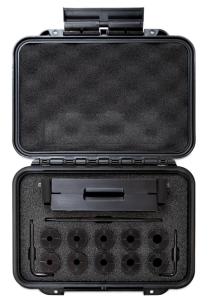
Offshore logistics are rarely straightforward. Equipment may need to be shipped to a vessel, transferred between locations or delivered to a remote operating site within a limited mobilisation window.
A compact, reusable cable mould kit can help teams prepare for suitable repair requirements before they arise.
Because the kit is designed for field use and supplied in a hard carry case, it can be incorporated into a vessel’s engineering equipment, an ROV support inventory or a suitable workshop setup.
For project planners, this creates an opportunity to improve readiness through:
- Including cable repair tooling in mobilisation and contingency plans.
- Holding appropriate inserts and moulding consumables alongside the kit.
- Reducing reliance on urgent procurement for suitable cable repair tasks.
- Making repair capability available across multiple projects where equipment and procedures permit.
SCS can also supply the associated moulding consumables, helping customers source the tooling and required materials through one specialist supplier. This does not remove the need to plan spares or carry out appropriate repairs and testing. It simply provides another option for reducing avoidable delays.
- One moulding system, multiple applications
The kit is intended for more than a single repair scenario. Its potential value lies in supporting recurring cable requirements across a range of subsea and marine activities.
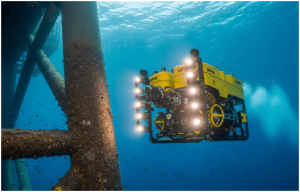
ROV operations
Suitable applications include repairs to unarmoured lighting, camera and pan-and-tilt cables, helping maintain operational readiness.
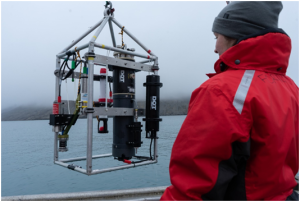
Marine science and hydrographic survey
Support suitable sensor connections, ADCP communications and datalogger-to-sensor cable assemblies in field and workshop environments.

Offshore energy and subsea engineering
Keep appropriate cable repair capability available for planned operations, equipment preparation and selected field repairs.
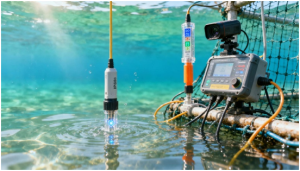
Aquaculture and environmental monitoring
Address suitable sensor, monitoring and communications cable requirements without automatically replacing complete assemblies.
The shared advantage is the ability to address suitable, low-volume cable requirements with reusable tooling rather than treating every job as a bespoke manufacturing exercise.
- What should operators consider before investing?
A reusable cable mould is most valuable when it matches the cables, working practices and recurring requirements of the organisation using it.
Before purchasing, consider the following:
- Cable compatibility: the system is designed for unarmoured subsea data cables, not armoured cables.
- Cable diameter and connector style: confirm compatibility with the specific cable and micro-circular connector arrangement. Standard inserts cover 7–12 mm diameters, with custom requirements assessed separately.
- Repair process: establish who will carry out the moulding work, where it will take place and what training or procedures are required.
- Materials and consumables: ensure the appropriate RTV polyurethane and associated materials are available for the intended application.
- Verification and testing: define the electrical, environmental and pressure tests required before the repaired or newly manufactured assembly is returned to service.
- Frequency of use: compare the investment against expected repair frequency, disposable tooling expenditure, external manufacturing costs and the operational consequences of delays.
The mould itself is a precision tool, not a certified cable assembly or a guarantee of suitability for every subsea application. The completed assembly must be assessed and validated against its intended operating requirements.
A practical investment in subsea project efficiency
Offshore projects depend on complex systems, careful planning and tight operational schedules. Yet some of the most disruptive delays can begin with a small component that needs repair or replacement.
The Reusable Subsea Cable Mould Kit offers operators and engineering teams another way to manage that risk: reusable tooling, interchangeable inserts and the ability to produce suitable waterproof polyurethane cable splices in the field.
For organisations that regularly work with micro-circular subsea cables, the benefits may extend beyond the immediate repair. Reduced dependence on external manufacturing, fewer repeat tooling purchases, more flexible low-volume production and improved testing readiness can all contribute to a more efficient operation.
The business case is straightforward: when a suitable cable repair can be completed at the point of need, the value lies not only in the repair itself, but in the delay, logistics and disruption that may be avoided.
Through its partnership with Dead Reckoning Engineering, Subsea Commercial Services makes this capability available to customers worldwide, helping subsea operators take greater control of cable repair and low-volume manufacturing.
Explore the Reusable Subsea Cable Mould Kit
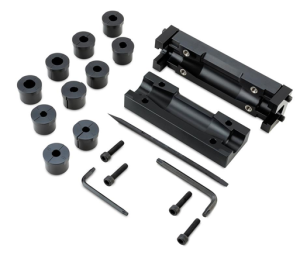
Bring cable repair capability closer to your operation.
Whether you are planning an offshore mobilisation, supporting a testing programme or looking to reduce recurring expenditure on suitable cable splicing work, SCS can help you assess whether the reusable cable mould system fits your requirements.
- Straight inline and Y-splice kits.
- Standard and adaptable cable diameter inserts.
- Associated moulding consumables available through SCS.
- Options for custom requirements and branded tooling.
View the Reusable Subsea Cable Mould Kit product page Here
Read our Cable Mould partnership article Here
Discuss your application with SCS Here